Best Long-Distance Trails in the UK for First-Time Thru-Hikers
The step from a weekend walk to a multi-day route is mostly logistics and nerve. You already know how to put one foot in front of the other; what changes is carrying everything you need, sleeping somewhere different each night, and getting up to do it all again. Britain happens to have a set of long-distance trails that suit a first attempt unusually well: clearly waymarked, dotted with villages and railway stations, and short enough to finish in a week or a fortnight without wrecking your knees. The trick is picking one whose difficulty matches your experience, then treating the planning as part of the walk.
What separates a kind trail from a hard one
Almost any National Trail can be walked by a reasonably fit beginner, but some forgive mistakes far more readily than others. Four things matter most:
- Waymarking. National Trails in England and Wales use the acorn symbol, and Scotland's Great Trails are generally signed too. On a well-marked path you can keep the map in your pocket for much of the day.
- Escape routes. Villages, bus stops and stations mean you can cut a day short if your feet, the weather or your morale says stop.
- Resupply. A shop or a pub every day or two is far better than carrying four days of food.
- Gentle terrain. Rolling farmland and old railway lines are kinder than coastal cliffs, bogs and repeated 500-metre climbs.
The South Downs Way: the gentlest hundred miles
Winchester to Eastbourne, a shade over 100 miles along the chalk ridge. The walking is rolling rather than mountainous, the surface is largely bridleway, and you meet gates rather than stiles, which matters more than you would think once your rucksack is heavy. Villages sit just below the ridge at places like Exton, Amberley and Steyning, and there are railway stations at Winchester, Petersfield, Amberley, Lewes and Eastbourne, so bailing out is genuinely easy.
Two warnings. The downs are exposed, with little shade and few water taps on the ridge, so carry more than you think you need in summer. Camping is limited, which makes this a B&B and pub sort of trail for most people; book the popular weekend spots well ahead. Eight days at 12–14 miles a day is a comfortable pace for a first timer, with a short final day into Eastbourne.
The West Highland Way: bigger days, better views
Milngavie to Fort William, about 96 miles, and the one most people mean when they talk about a first Scottish thru-hike. The first two days along old military roads and a disused railway line are easy going. Then the Loch Lomond shore arrives, and with it roots, rocks and slow miles; after that comes Rannoch Moor, Glen Coe, the Devil's Staircase and the long run down to Fort William.
Scotland's access code allows lightweight wild camping in many places, but summer camping byelaws in parts of Loch Lomond and the Trossachs mean you may need a permit, so check before you travel. Midges are at their worst from June to August; a head net weighs nothing and saves evenings. Milngavie is on the Glasgow suburban network, and Fort William has train and bus links south, which makes the logistics refreshingly simple. Book accommodation early if you are going in summer.
Two more that fit the same brief
Hadrian's Wall Path
About 84 miles from Wallsend to Bowness-on-Solway, crossing the narrowest part of England. The archaeology keeps you entertained, accommodation is plentiful, and buses link the villages. Expect some muddy stretches and a bit of road walking near Newcastle.
The Great Glen Way
Fort William to Inverness, roughly 79 miles of canal towpath, forest track and quiet road, with a higher option above Loch Ness if you fancy it. It is easier underfoot than the West Highland Way, and you can wild camp in Scotland or use the villages along the glen. Buses run the length of the glen if you need them.
Other trails worth a look
- Cotswold Way — about 102 miles, honey-stone villages and plenty of pubs, but more climbing than the South Downs.
- The Ridgeway — about 87 miles, quiet and prehistoric, though resupply is thin.
- Northumberland Coast Path — around 62 miles, flat, breezy and castle-studded; a good three-day taster.
- Dales Way — roughly 80 miles of riverside walking from Ilkley to Bowness-on-Windermere.
- Pembrokeshire Coast Path — 186 miles and a genuine step up, with relentless ups and downs. Save it for your second or third trip.
Planning the trip
- Work out how many days you actually have, then pick a route that fits at 10–14 miles a day with one rest day built in.
- Plot where you will sleep each night and book it, especially on the West Highland Way and the South Downs Way in summer.
- Check transport at both ends before you commit. A trail with a station at each terminus saves a lot of stress.
- Decide between camping and B&Bs, and check whether baggage transfer operates on your route if you would rather walk with a day pack.
- Train with the pack you will actually carry, on consecutive days, so you know how your shoulders and feet behave on day three.
- Leave a rough plan with someone at home, and carry a paper map alongside your phone.
Feet, weather and the small things
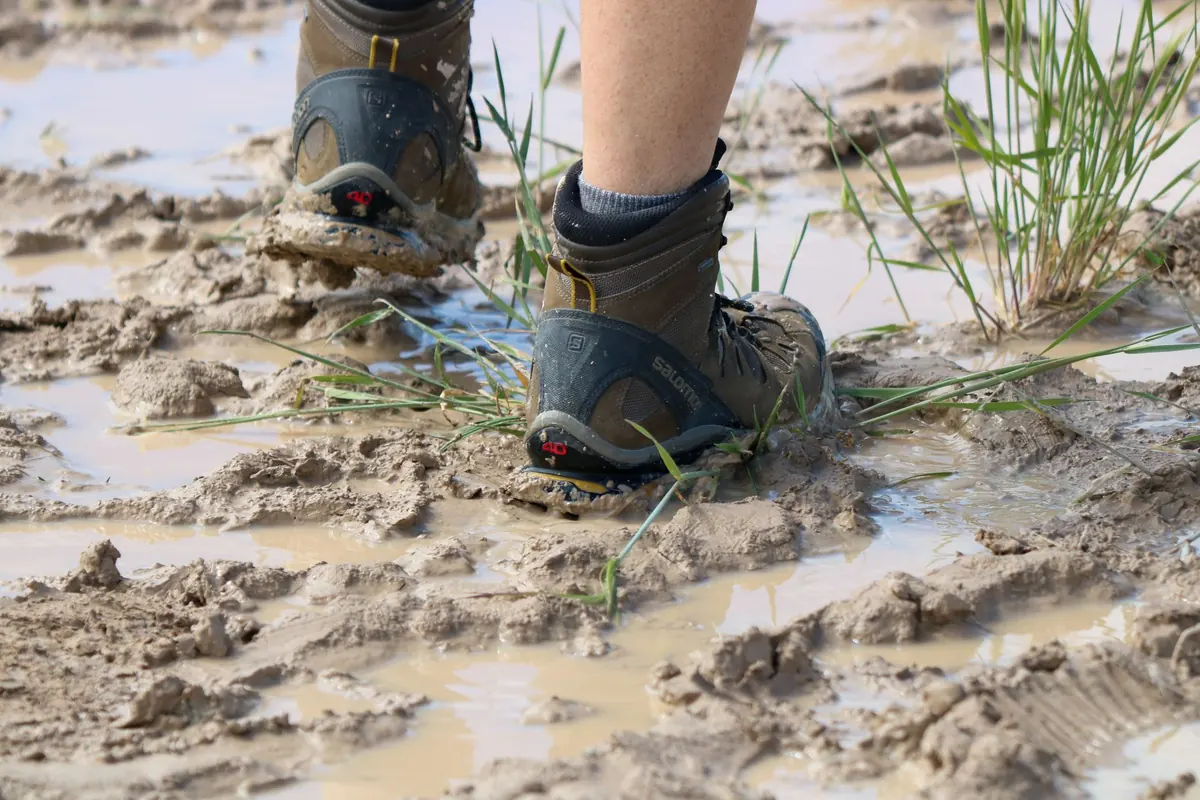
Most first thru-hikes end early because of blisters, not fitness. Break your footwear in properly, change socks daily, and treat hot spots the moment you feel them rather than at the next village. Take waterproofs you trust, a warm layer for the evening, and enough water for the section ahead. If you have a heart condition, joint trouble, diabetes, or you take regular medication, speak to your GP or pharmacist before committing to long days with a loaded pack.
Keep your first one short
Seven days and 80 to 100 miles is plenty for a first thru-hike, and finishing with energy left is the point. The South Downs Way is the safest introduction if you want gentle ground and easy exits; the West Highland Way gives you bigger scenery for a modest increase in effort. Either will teach you what your body wants, how much food you really eat, and how little kit you can get away with. Then pick something longer, and enjoy knowing exactly what you are doing.
Photo: Tom Swinnen / Pexels

Three Days on the West Highland Way: Trip Report and Packing Tips
A three-day fastpack of the West Highland Way, with notes on where the pace fell apart and which kit...

A Winter Ascent of Snowdon: Trip Report and Lessons Learnt
A cold, clear winter day on Yr Wyddfa via the Llanberis Path, with the kit that earned its place and the...
About Us