Walking in the Rain: How to Stay Comfortable on Wet UK Hikes
Walking in the Rain: How to Stay Comfortable on Wet UK Hikes
Rain is the default setting for a lot of British hill days, and no jacket will keep you completely dry through a full day of it. That's fine. The aim isn't dryness; it's staying warm, steady and comfortable enough that the weather stops being the only thing you notice. Get that right and wet walks become some of the best ones: empty paths, dripping woodland, streams running at full volume, and a flask of tea at the end that tastes better than anything a pub could serve.
There's a reason experienced walkers often prefer a wet day to a hot one. The hills empty out, the colours deepen, and every waterfall, gully and stream comes alive. But comfort in the rain doesn't happen by accident. It comes from a small number of decisions made before you leave the car: a forecast you actually read, a route with options, a waterproof system rather than a single jacket, and a pace that keeps you warm without making you sweat.
Read the forecast properly, then choose your route
A generic rain icon tells you almost nothing. Check the hill forecast for the area you're heading to — the Met Office mountain forecast and MWIS are both worth two minutes — and read three things: timing, wind and cloud.
Timing decides your start. A band due at two in the afternoon gives you a dry morning on the hill if you're back down by one. If MWIS suggests rain arriving by midday, a 7.30am start and a summit by 11am can turn a washout into a genuinely pleasant half-day. If the front is already overhead, either accept it and dress for it, or choose a low-level route where the trees and valley walls give you some shelter.
Wind decides how bad the rain feels: a light shower in a stiff wind on an exposed ridge stings your face and empties your hood in seconds. A 40mph gust on the Cairngorm plateau or Helvellyn's Striding Edge turns horizontal rain into something close to gravel. Wind also increases windchill, so a temperature of 8°C can feel closer to freezing when you're wet and exposed. Cloud decides whether the route makes sense at all. If the cloud base is forecast at 500 metres, a summit day may mean hours of compass work with no view; a valley or forest route will be far more enjoyable.
Then pick a route with options: a valley circuit you can shorten, a linear route with a bus at the far end, a forest loop where the trees take the worst of it. Decide your turnaround point before you leave the car, so you're not arguing with yourself halfway up a hill in the rain.
Look for escape routes, not just distance
On a wet day, the map matters as much as the forecast. Before you set off, identify bridges, shelter spots, forest tracks and paths that lead back to the road. In the Lake District, a Borrowdale circuit can be cut short at Rosthwaite; in Snowdonia, a walk up the Watkin Path can be turned around at the waterfalls; in the Pennines, a reservoir loop often offers a quick return along a dam road. Mark these on your map or in your head. They turn a committing day into a flexible one.
Also tell someone your route and expected return time. Carry a paper map and compass even if you use a phone, and keep the phone in a waterproof case or dry bag. Cold hands and wet screens make touchscreens unreliable. If visibility drops, navigate by bearing and timing, and use handrails like streams, walls and fences to confirm your position. The goal is not to prove anything; it's to get down comfortably.
Build a waterproof system, not just a jacket
The shell
Look for taped seams, a hood with a wired peak that can be cinched around your face, adjustable cuffs, and a storm flap over the zip. Pit zips are worth their weight because they let you dump heat on a climb without opening the whole jacket. A good shell should fit over a midlayer without feeling tight, and it should be long enough to cover the top of your trousers. If water starts soaking into the shoulders or the hood flops when wet, it needs reproofing or replacing.
Layers underneath
Waterproofs only work if the layers beneath them are doing their job. Start with a synthetic or merino base layer that moves sweat away from your skin. Add a fleece or light synthetic midlayer for warmth. Avoid cotton next to the skin: once it's wet, it stays wet and sucks heat from your body. Carry a spare dry base layer and a warm hat in a dry bag, even on a short walk. If you get chilled at a lunch stop, changing that layer can be the difference between a good day and a miserable one.
Legs, feet and hands
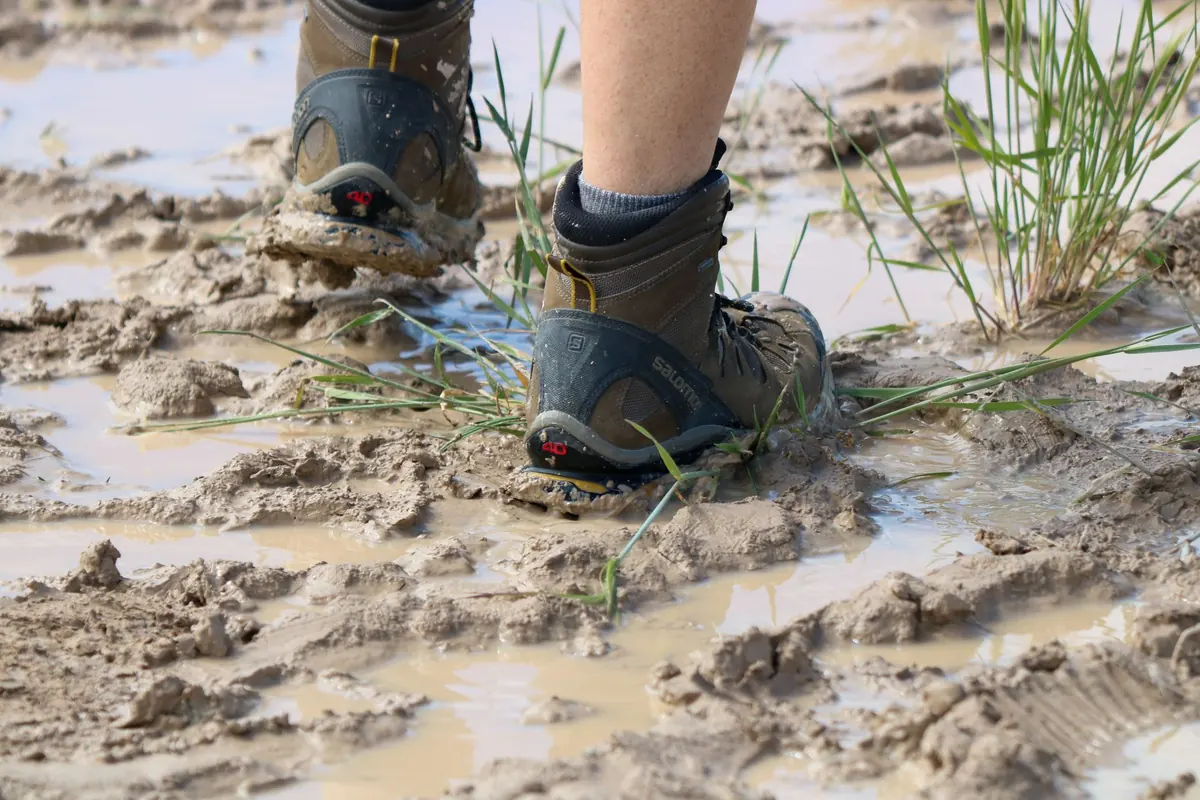
Waterproof trousers are not optional in steady rain. They keep the wind off, protect your legs from wet vegetation, and stop water running down into your boots. Gaiters help in long grass and deep puddles. Boots should have a waterproof membrane and enough grip for wet rock, roots and mud; trail shoes can work in summer, but they will soak through. Wear wool or synthetic socks, and pack a spare pair in a dry bag. Add thin waterproof gloves, a warm hat and a buff. Cold hands and a cold head make everything else feel worse.
Pack and contents
Assume everything in your pack will get wet unless you protect it. Use a rucksack liner or a heavy-duty bin bag inside your pack, then put key items in small dry bags: phone, map, spare layer, snacks, headtorch. Carry an emergency shelter or foil blanket, even on a day walk. A flask of tea or soup is not a luxury; it's morale, warmth and hydration in one. The same goes for easy-to-eat food: flapjack, nuts, dried fruit, sandwiches that don't fall apart. In rain, you often eat on the move or during short sheltered stops, so food that needs two hands and a dry lap is a bad idea.
Walk smart: pace, heat and foot placement
Rain makes you want to hurry, but hurrying often means sweating, and sweating is the fastest way to get cold. Aim for a steady pace you can hold all day. On climbs, open pit zips, remove your hat, and let some heat out. On exposed ridges, close everything down and keep moving. If you start to feel chilled, add a layer before you stop; if you're overheating, vent before you're soaked from the inside.
Foot placement matters more in the wet. Wet rock, especially dark slate and limestone, can be greasy. Wooden boardwalks, roots and muddy descents are slippery. Take shorter steps, keep your weight over your feet,
Photo: Deb Hayes / Pexels
Three Days on the West Highland Way: Trip Report and Packing Tips
A three-day fastpack of the West Highland Way, with notes on where the pace fell apart and which kit...
A Winter Ascent of Snowdon: Trip Report and Lessons Learnt
A cold, clear winter day on Yr Wyddfa via the Llanberis Path, with the kit that earned its place and the...
About Us