10 Common Mistakes Beginner Hikers Make on UK Hills (and How to Avoid Them)
Almost everyone's first proper hill day follows a familiar pattern. You park up somewhere in the Lakes or the Peak District, hoist a rucksack that weighs far more than it needs to, glance at the cloud sitting on the tops, and set off with a vague plan of following the path. Four hours later you're eating your last sandwich on a summit you didn't expect to reach, watching a phone battery drop into single figures.
None of that is unusual, and none of it is a disaster. Most people come home with sore legs, a windburnt face and a story worth telling. But these are the mistakes worth fixing early, because they're the ones that quietly turn a good day out into a very long one — or, occasionally, into a call to mountain rescue that nobody wanted.
Taking far too much stuff
The temptation is to pack for every possible outcome: a spare jumper, spare trousers, a flask of soup, a camera bag, three litres of water, a paperback. The rucksack ends up heavy, you're sweating on the first climb, and you spend half the morning adjusting straps instead of looking at the view.
A useful test before you leave the house: put the packed bag on and walk up and down your stairs ten times. If you're breathing hard in a warm hallway, you've overpacked.
For a normal UK day walk, a 20–25 litre rucksack is plenty. Take:
- Waterproof jacket and trousers, packed rather than carried "just in case"
- A warm mid layer and a spare dry base layer for the summit
- Enough food for the day, plus one extra item you never eat
- At least a litre of water, more on a long route or a hot day
- A headtorch, even in July
- Paper map, compass, small first aid kit, foil blanket or survival bag
- Charged phone and a small power bank
Leave the second pair of jeans and the heavy flask behind. If the bag feels heavy in the hallway, it will feel twice as heavy on a 600-metre climb, and you'll notice it most on the descent, when tired legs and a top-heavy pack are a poor combination.
Relying on a phone for navigation
Phone maps are brilliant until they aren't. Cold drains a battery quickly, a wet screen stops responding, and one wrong turn on a cloud-covered plateau can leave you following a path that isn't there. It happens to experienced walkers too, usually in the last hour of daylight, when the sensible decision is to stop rather than press on.
Carry a paper map of the area and a compass you know how to use. The Ordnance Survey 1:25,000 Explorer series shows walls, fences and paths in useful detail; 1:50,000 Landranger covers more ground per sheet. A laminated map case costs a few pounds and keeps the whole thing usable in the rain.
Four things to do before you go
- Trace the route on the map and note the grid reference for the start and any awkward junctions.
- Learn to set the map with the compass and take a bearing. Ten minutes on a local footpath is enough to start.
- Keep the phone warm in an inside pocket and treat it as a backup, not the plan.
- Tell someone your route and expected return time, and message them when you're back.
If you're not sure where you are, stop. Walking on in the hope the path will make sense is how small uncertainties become big ones.
Ignoring the forecast — and then ignoring the weather
UK hill forecasts are quick to check and easy to dismiss when the car park is sunny. Look at the Mountain Weather Information Service or the Met Office mountain forecast the night before and again in the morning. Read the wind speed and cloud base, not just the valley temperature.
The difference is often dramatic. Ambleside can sit at 14°C in light breeze while the top of Helvellyn is at 4°C with 50 mph gusts and visibility down to 20 metres. That's not a reason to stay home; it's a reason to carry the right layers and to be honest about your own experience.
Wind and wet catch beginners out most often. A waterproof that stayed in the bag is no use at 700 metres when the cloud arrives and the temperature drops. Put the shell on before you get cold, and keep hat and gloves within reach rather than at the bottom of the rucksack.
Be willing to turn back. If the wind is pushing you sideways on an exposed ridge, or you can't see the next cairn, the summit will still be there next month. Cold and wet is the start of hypothermia: if someone becomes clumsy, unusually quiet or stops shivering, get them out of the wind, into dry layers and shelter, and call for help. If you're unsure about a medical concern, seek professional advice.
Wearing the wrong kit
Denim and cotton are the classic beginner mistake. They hold water, dry slowly and pull heat out of you the moment you stop moving. A cotton T-shirt under a waterproof is a cold, heavy layer waiting to happen.
Dress in thin layers you can add and remove: a wicking base layer, a fleece or light synthetic mid layer, and a waterproof shell. Avoid trousers that soak up water and stay wet for hours. Add a hat and gloves in all but the warmest weather.
Footwear matters more than anything else
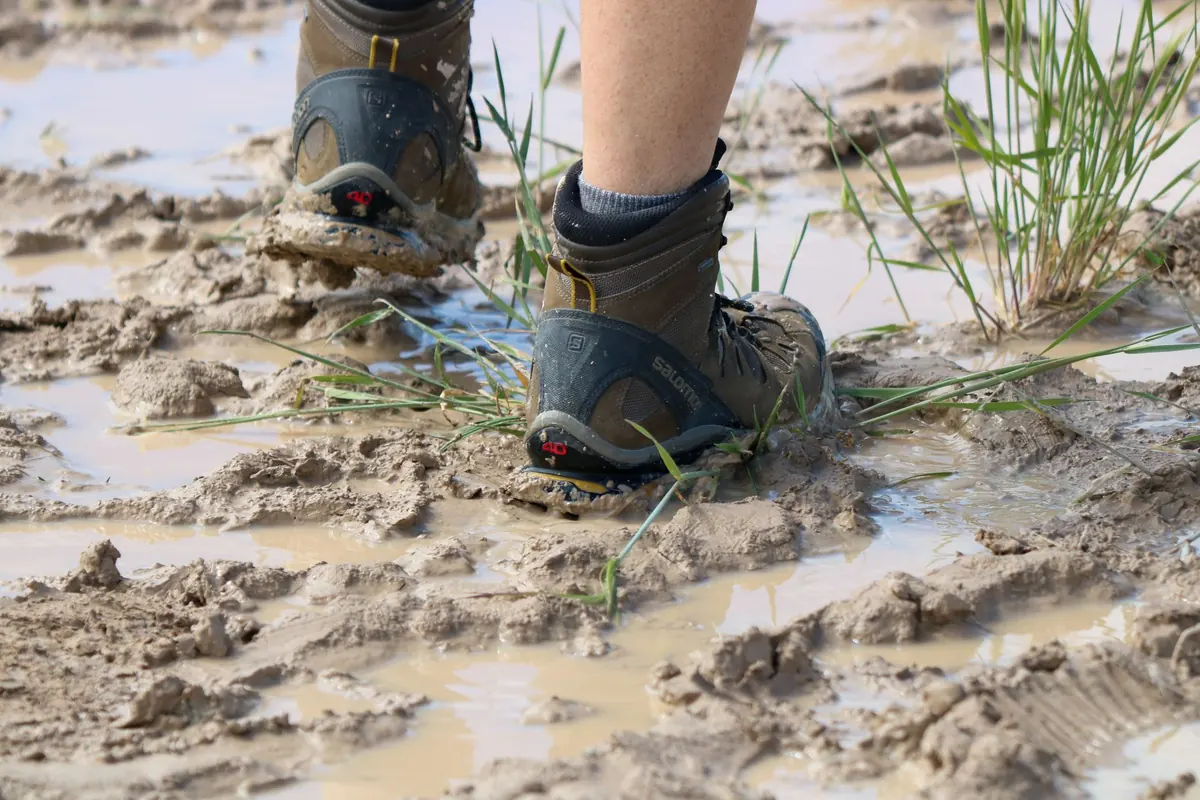
Trainers work on dry, low-level paths, but on rough ground, bog or a rocky descent you want grip and some ankle support. Whatever you wear, break it in on shorter walks first. Pair boots with proper walking socks rather than thin cotton ones, which bunch, hold sweat and rub.
Blister plasters, a spare pair of socks and trimmed toenails will do more for your day than any gadget.
Setting off too late — and walking too fast uphill
Beginners often plan the route but not the clock. A ten-mile round with 800 metres of ascent is a full day out for most people, and it gets longer the moment you add photo stops, a lunch break and a wrong turn. Starting at 11am in November means finishing in the dark.
As a rough guide, allow one hour for every 5 km plus one hour for every 600 metres of climbing, then add a third for stops and faffing. Work out your turnaround time before you set off and stick to it. A headtorch in the bag is the safety net, not the plan.
Pacing matters just as much. The walkers who finish comfortably are usually the ones who set off steadily and slow down further on the steep bits, rather than sprinting the first climb and stopping every fifteen minutes afterwards.
A hill day is not a race against anyone, least of all yourself. Walk at a pace where you could still hold a conversation, and you'll arrive at the top with something left in the tank.
Not eating or drinking enough
It sounds obvious, but plenty of tired, grumpy, wobbly walkers are simply under-fuelled. Cold, wind and effort all burn energy, and appetite is often the last thing you feel on a windy summit.
Eat little and often rather than saving everything for lunch. Something every hour — a handful of nuts, a flapjack, a piece of fruit, a cheese sandwich — keeps you moving far better than one big sit-down meal.
Drink before you feel thirsty, too. Around a litre is a sensible minimum for a moderate day; more if it's warm, if the route is long, or if you're carrying a heavy pack. A hot drink in a flask is a genuine morale boost on a cold summit, which is the one exception to leaving heavy things at home.
None of this needs expensive gear or years of experience. A lighter bag, a paper map, a proper look at the forecast, a steady pace and a pocket full of snacks will improve almost any hill day — and leave you wanting the next one.
Photo: sitoruiz / Pixabay
Three Days on the West Highland Way: Trip Report and Packing Tips
A three-day fastpack of the West Highland Way, with notes on where the pace fell apart and which kit...
A Winter Ascent of Snowdon: Trip Report and Lessons Learnt
A cold, clear winter day on Yr Wyddfa via the Llanberis Path, with the kit that earned its place and the...
About Us